Baguiati, Kalighat, Bardhaman, Midnapore, Bankura, Arambagh
+91 7477886099



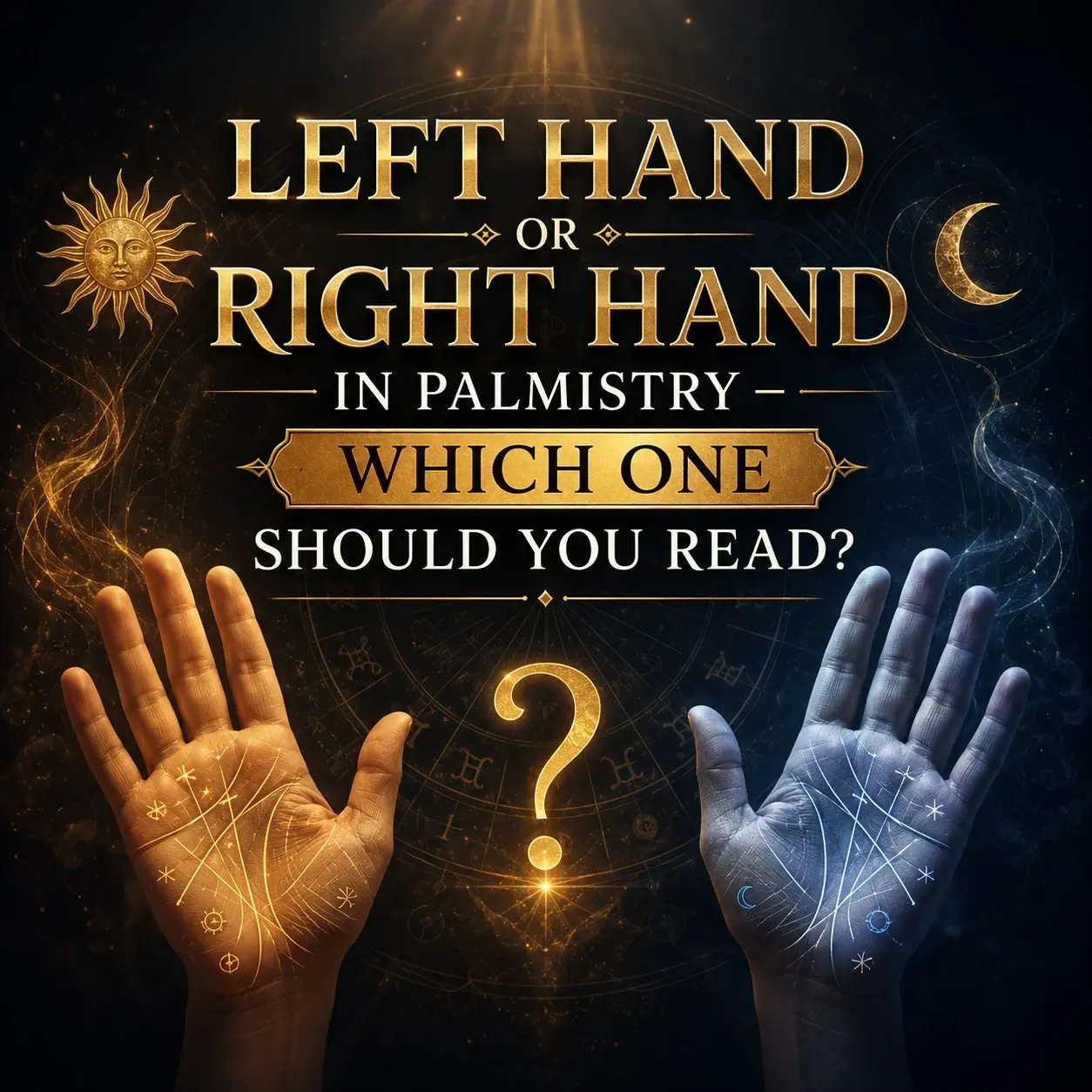
"Anjan ji, which hand should I show you?" I cannot count how many times a client has asked me this the moment they sit across from me. One young woman once hesitated with both palms open on the table, unsure, almost embarrassed, as if she were about to make a mistake before the reading had even begun. There is no mistake here, only confusion born of half-information floating around on the internet. This confusion is exactly why I decided to settle the matter once and for all in this blog.
The question of left hand or right hand in palmistry is one of the oldest debates in this ancient science, and it deserves a clear, honest answer rather than a one-line rule repeated without context.
In this blog, I will walk you through the classical Vedic position on hand selection, the modern approach followed by practising palmists like myself, and why, in truth, both hands carry equally important information. By the end, you will know exactly what to expect and how to prepare when you come for a palm reading, whether in person or online.
Palmistry in India is not a modern invention, nor is it borrowed from the West. It comes from Hasta Samudrika Shastra, an ancient branch of Vedic Astrology that studies the lines, mounts, and shape of the palm as a mirror of one's karma and destiny. Our sages observed that the hand changes subtly over the years, recording the story of a person's actions, choices, and inner nature. This tradition existed long before modern science began studying fingerprints and hand shape, and it remains, in my view, one of the most practical tools for self-understanding that our ancestors gave us.
In classical texts, the left hand is often described as the hand of inheritance. It reflects:
Think of the left hand as the original blueprint, the design that existed before the building was constructed.
The right hand, on the other hand, shows life as it is actually being lived. It reflects:
I often tell clients that the left hand tells you what you were handed, and the right hand tells you what you did with it.
Many people have heard an old rule passed down through generations: read the left hand for women and the right hand for men. This comes from a symbolic idea in traditional texts where the left side was associated with feminine, receiving energy, and the right side with masculine, active energy. It is not wrong, but it is incomplete, and treating it as a strict law ignores the deeper purpose of palmistry, which is to read the whole person, not just their gender.
Most experienced palmists today, myself included, follow what is known as dominant hand palmistry. Here, the hand you write and work with the most is treated as the active hand, showing your present life, your choices, and how your inherited potential is unfolding. The other hand becomes the passive or sub-conscious hand, showing what was given to you at birth.
This approach makes far more sense in practice because:
I have never given a complete reading using only one palm, and I never will. The real skill in Hasta Samudrika Shastra lies in comparing both hands together. When the lines on both palms match closely, it often suggests a person living close to their natural destiny. When there are noticeable differences, it usually points to a life shaped strongly by personal effort, choices, or significant turning points.
I remember a client, a businessman in his forties, whose left palm showed a modest, ordinary career line, yet his right palm showed a strong, rising fortune line. His life had been transformed entirely through his own determination, and both palms together told that story beautifully. A single hand would have told only half of it.
If you are preparing for a palmistry session, whether with me or any qualified practitioner, keep these points in mind:
This preparation applies whether you are visiting for palmistry alone or combining it with a broader Kundli analysis, as I often do for a fuller picture of a person's path.
This is a traditional belief, but most modern palmists, including myself, prefer the dominant hand approach as it applies fairly to everyone.
The dominant hand generally shows how your present efforts are shaping your path, though a complete picture always comes from reading both palms together.
Yes, certain lines can soften, deepen, or shift subtly as your life circumstances, habits, and mindset evolve.
No special preparation is required beyond clean, relaxed hands and an open mind for the conversation.
Yes, Hasta Samudrika Shastra is a respected branch of Vedic Astrology and works wonderfully alongside Kundli analysis for deeper insight.
The debate over left hand or right hand in palmistry ultimately dissolves once you understand that our hands were never meant to be read in isolation. They are two chapters of the same story, one telling you where you came from, the other showing where your own choices are taking you. When read together with sincerity and skill, they offer not a rigid prediction, but a gentle mirror to help you walk your path with more awareness and confidence.
If you would like a detailed, personalised palm reading, I invite you to reach out and experience this ancient wisdom for yourself.
If you wish to explore what your palm reveals about your destiny, I welcome you to get in touch for a personalised consultation. Whether you prefer a face-to-face session in Kolkata or an online reading, I am glad to guide you through this ancient science with clarity and care. Reach out today and take the first step towards understanding yourself a little more deeply. Call/WhatsApp: +91 7477886099 Email: astro@anjanshastri.com Website: anjanshastri.com Location: Kolkata, West Bengal

Kojagari Lakshmi Puja 2026: Date, Puja Vidhi, Alpana and What Maa Lakshmi Blesses on Sharad Purnima
21/10/2026
Rahu Mahadasha: Effects, Challenges and Remedies Every Native Should Know
14/10/2026
Maa Durga's Arrival and Departure on Gaja, Nauka, Doli or Ghora: What the Vahana Predicts for the Year Ahead
07/10/2026
Rudraksha Mukhi Guide: Which Rudraksha Suits Which Problem and How to Wear It Correctly
23/09/2026
© 2024 Dr Anjan Shastri . All Rights Reserved | Design & Developed by DITS